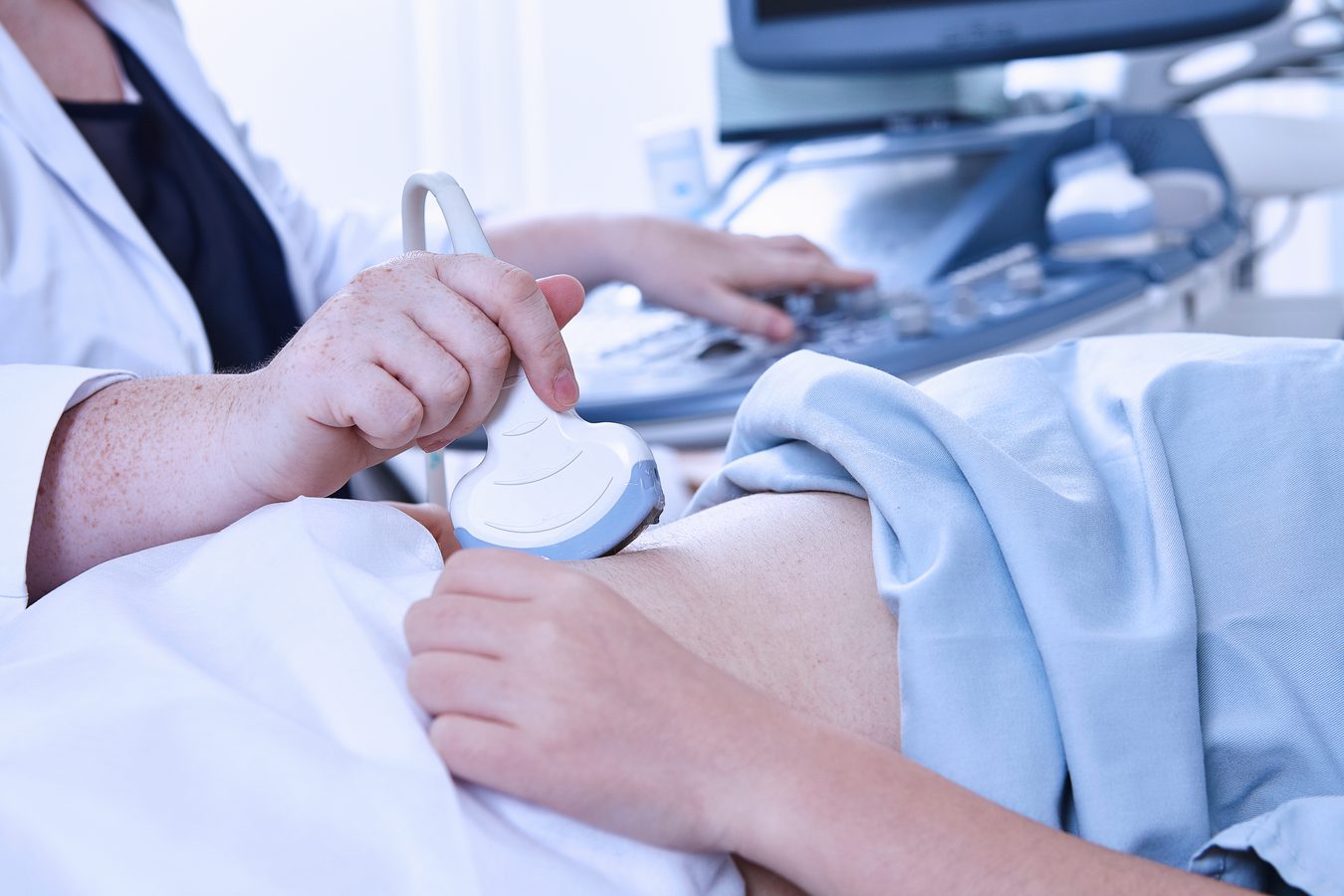
Diagnostic medical sonographer performing ultrasound examination
Home / All Careers / Diagnostic Medical Sonographer
Career Profile · Healthcare

Diagnostic Medical
Sonographer

Salary · Training · Career Path · 2024 Data
$89,340
Median annual salary
BLS · 2024
+10%
Job growth 2024–2034
BLS — faster than average
2 Yrs
Associate degree path
ARDMS board eligible
$125K+
Top 10% annual salary
BLS top 10%
Imaging
Track
OB, cardiac, vascular, musculoskeletal
Programs near you have limited open seats
Start Your Sonography Path
Free · No commitment · Match with programs near you
You are in.
We will match you with programs near you. Check your email within 1 business day.
Salary data

What Diagnostic Sonographers Actually Earn

Median annual salary
$89,340
One of healthcare's highest-paying 2-year credentials
Top 10% annual salary
$125,000+
Cardiac and vascular specialty sonographers
Entry level (10th pctile)
$64,000
First-year ARDMS in a hospital or clinic
Cardiac echo premium
+$15–$25K
Echo techs earn significantly above OB/GYN sonographers
Entry-level sonographer
$64,000
Median sonographer
$89,340
Cardiac/vascular specialty
$110,000+
Top 10% sonographer
$125,000+
Diagnostic Medical Sonography is one of the most financially compelling healthcare credentials in existence — a median salary of $89,340 from a 2-year associate degree program. Cardiac sonographers (echo techs) and vascular technologists routinely earn $100,000–$120,000+ — approaching physician assistant income with a fraction of the education cost.

Sources: BLS OES May 2024 · ARDMS 2024 Salary Survey · Vivian Health Travel Data 2024. Salary figures are national estimates.

Florida median sonographer salary
$82,000
Below national — high demand imaging market
Florida top 10%
$112,000+
Cardiac and vascular specialty sonographers
Entry level in Florida
$59,000
First-year ARDMS — FL market
FL OB/GYN sonography
High demand
FL birth rate and maternal care driving OB volume
Tampa Bay sonographers
~$80,000
Orlando sonographers
~$83,000
Miami sonographers
~$88,000
Jacksonville sonographers
~$78,000
Florida-specific: Florida does not require state licensure for diagnostic medical sonographers — ARDMS certification is the professional standard. Florida's combination of a large elderly population (driving cardiac and vascular imaging) and high birth rate (driving OB/GYN sonography demand) creates a uniquely diverse sonography market across the state.

Sources: BLS OES May 2024 FL state data · CareerOneStop · ARDMS. City estimates are approximations.

Texas median sonographer salary
$84,000
Below national — no state income tax
Texas top 10%
$115,000+
Cardiac and vascular specialty techs
Entry level in Texas
$60,000
First-year ARDMS — TX market
TX cardiac sonography
Growing
Texas heart disease burden driving echo demand
Houston sonographers
~$84,000
Dallas sonographers
~$84,000
Austin sonographers
~$82,000
San Antonio sonographers
~$78,000
Texas-specific: Texas does not require state licensure for diagnostic medical sonographers. The Texas Medical Center's cardiac program and DFW's large hospital systems are major employers. Texas's high rate of cardiovascular disease creates sustained demand for echocardiography and vascular sonography specifically.

Sources: BLS OES May 2024 TX state data · CareerOneStop · ARDMS. City estimates are approximations.

Training paths

How to Become a Diagnostic Medical Sonographer

01
Associate Degree in Sonography (2 Years)
Standard path

A 2-year CAAHEP-accredited associate degree in diagnostic medical sonography covering ultrasound physics, scanning technique, anatomy, and pathology. Graduate eligible to sit for ARDMS specialty exams.

  • Program cost: $20,000–$50,000 — competitive admission
  • Completed in 2 years with significant clinical scanning hours
  • ARDMS exam eligibility: Abdomen (AB), OB/GYN, or other specialty
  • Most programs accept a limited number of students — apply early
  • High employment rate — ARDMS credential is employer gold standard
02
Bachelor of Science in Sonography (4 Years)

A 4-year degree providing broader academic preparation. Preferred for management roles in imaging, educator positions, or advanced specialty certifications. Not required for clinical practice but opens leadership doors.

  • Supports advancement to imaging department leadership
  • Required for some sonography education faculty positions
  • Provides foundation for graduate study in health sciences
  • Cost is significantly higher without meaningful first-year salary difference
03
One-Year Post-Primary Certificate (For Allied Health Professionals)

For practicing healthcare professionals (RTs, RNs, EMTs) with anatomy and patient care experience, some programs offer accelerated 12-month certificates in sonography. ARDMS requires a qualifying allied health credential for this pathway.

  • Requires qualifying credential: RT, RN, RDMS, CRT, or others accepted by ARDMS
  • Accelerated — bypasses general anatomy and patient care prerequisites
  • 12 months intensive scanning training
  • ARDMS exam eligible immediately upon program completion
  • High value if you are already earning in healthcare and want to upskill
Full step-by-step guide: How to become a Diagnostic Medical Sonographer
Day in the life A Day in the Life of a Diagnostic Medical Sonographer
+
Day in the life

A Day in the Life of a Diagnostic Medical Sonographer

7:30 AM
Review the exam schedule and prep equipment
Check ultrasound machine function, transducer condition, and gel supply. Review patient notes and clinical indication for each scheduled exam.
8:00 AM
Morning abdominal and OB exams
Liver, gallbladder, kidneys, spleen — detailed abdominal scanning requires systematic technique. OB exams involve fetal biometry, anatomy survey, and documentation of findings.
10:00 AM
Pelvic and transvaginal studies
Gynecologic pathology, follicle monitoring, and early obstetric studies. Patient communication and comfort are especially important for these exams.
11:30 AM
Echo or vascular studies (specialty-certified techs)
Echocardiography requires detailed cardiac measurement protocols. Vascular techs evaluate carotid arteries, venous insufficiency, and peripheral arterial disease.
1:30 PM
Afternoon exam volume
Afternoon typically includes outpatient appointments, ER requests, and in-patient portable exams. Portable scanning requires transporting equipment and scanning in ICU or ED beds.
4:00 PM
Image archiving and end of shift
Archive completed studies to PACS for radiologist interpretation. Document findings, measurements, and any incidental observations in the report. Clean and disinfect transducers.
What you will need Skills That Make a Great Diagnostic Sonographer
+
What you will need

Skills That Make a Great Diagnostic Sonographer

Scanning technique and hand-eye coordination
Ultrasound is inherently operator-dependent. The image you produce is only as good as your scanning technique. This skill develops through thousands of clinical hours.
Anatomy mastery
Recognizing normal vs. abnormal anatomy in real-time, across multiple planes and patients with varied body habitus, is the core cognitive demand of sonography.
Ultrasound physics knowledge
Understanding how sound waves interact with tissue — frequency, attenuation, artifact recognition — allows techs to optimize image quality and avoid diagnostic errors.
Patient communication
Sonographers often encounter anxious patients waiting for cancer follow-up or obstetric findings. The ability to be warm and reassuring without disclosing diagnostic impressions is a critical professional skill.
Documentation precision
ARDMS-compliant measurement protocols, AIUM reporting standards, and complete image archiving are non-negotiable for diagnostic sonography.
Adaptability across specialties
The most valuable sonographers are cross-trained. Abdomen + OB + vascular = higher income and more scheduling flexibility in any market.
Job market outlook The Market for Diagnostic Sonographers in 2025
+
Job market outlook

The Market for Diagnostic Sonographers in 2025

Projected growth 2024–2034
+10%
BLS — faster than average for all occupations
New openings per year
7,000+
BLS projection — growth plus replacement
Current sonographer jobs in the US
78,000+
BLS · 2024
AI displacement risk
Low
Real-time scanning requires human skill — AI assists interpretation, not acquisition

Ultrasound is expanding beyond obstetrics into virtually every clinical specialty — cardiology, oncology, musculoskeletal, point-of-care emergency medicine, and vascular surgery. This expansion is creating new demand for specialty-certified sonographers in settings that did not traditionally employ them a decade ago.

The diagnostic sonographer credential has one of the strongest income-to-education ratios in all of healthcare. A 2-year associate degree produces a median salary of $89,340 — and cardiac and vascular specialty certifications push well past $100,000. For candidates weighing a 4-year nursing path vs. a 2-year sonography path, the financial case for sonography deserves serious consideration.

Point-of-care ultrasound (POCUS) is creating new sonography roles in emergency medicine and critical care. Emergency physicians and intensivists are increasingly using bedside ultrasound — and they need trained sonography professionals to support these workflows. POCUS certification is an emerging specialty with strong demand growth.

Common questions Diagnostic Medical Sonographer FAQs
+
Common questions

Diagnostic Medical Sonographer FAQs

Diagnostic medical sonographers perform ultrasound examinations using high-frequency sound waves to create images of internal organs, blood vessels, and developing fetuses. Unlike X-ray or CT, ultrasound uses no ionizing radiation — making it a preferred imaging modality for obstetrics, pediatrics, and musculoskeletal evaluations. Sonographers perform the scan; radiologists or cardiologists interpret the findings.
A 2-year associate degree is the standard path. Some hospitals and healthcare systems offer 12-month certificate programs for credentialed allied health professionals. After completing an accredited program, graduates sit for ARDMS specialty exams — most commonly Abdomen (AB) and Ob/Gyn (OB). Cardiac (echocardiography) and vascular certifications are separate exams requiring additional training.
The ARDMS (American Registry for Diagnostic Medical Sonography) credential is the gold standard for sonography certification in the US. The RDMS designation covers abdominal and OB/GYN sonography. The RDCS (Registered Diagnostic Cardiac Sonographer) covers echocardiography. The RVT (Registered Vascular Technologist) covers vascular studies. Most employers require ARDMS certification or active pursuit of it for new hires.
Cardiac sonography (echocardiography) and vascular technology consistently pay the most — often $15,000–$25,000 above OB/GYN or abdominal sonography in the same market. These specialties require separate ARDMS exams and typically more clinical experience to qualify, but the income premium makes the investment worthwhile for motivated sonographers.
Obstetric sonographers do perform pregnancy ultrasounds — often the most emotionally significant imaging any patient experiences. However, they are trained not to disclose diagnostic findings to patients before physician review. The ability to maintain professional composure when detecting abnormalities while keeping patients calm is one of the most important skills in OB sonography.
Similar careers

Explore Related Careers

What people are saying
The salary data on this site is more detailed than anything I found in my research. Finally real numbers.
SarahFlorida
I had no idea how many healthcare careers were available without a four-year degree. This changed everything for me.
MariaTexas
Finally a site that gives honest information about healthcare careers without trying to sell me something.
JessicaGeorgia
Your Sonography
Path Starts Here.

We will match you with accredited sonography programs near you. Free for candidates. Always.

Get Matched Free → Browse All Careers
FIND YOUR MATCH FREE MATCHING · 2 MIN · NO SPAM
See My Matches →